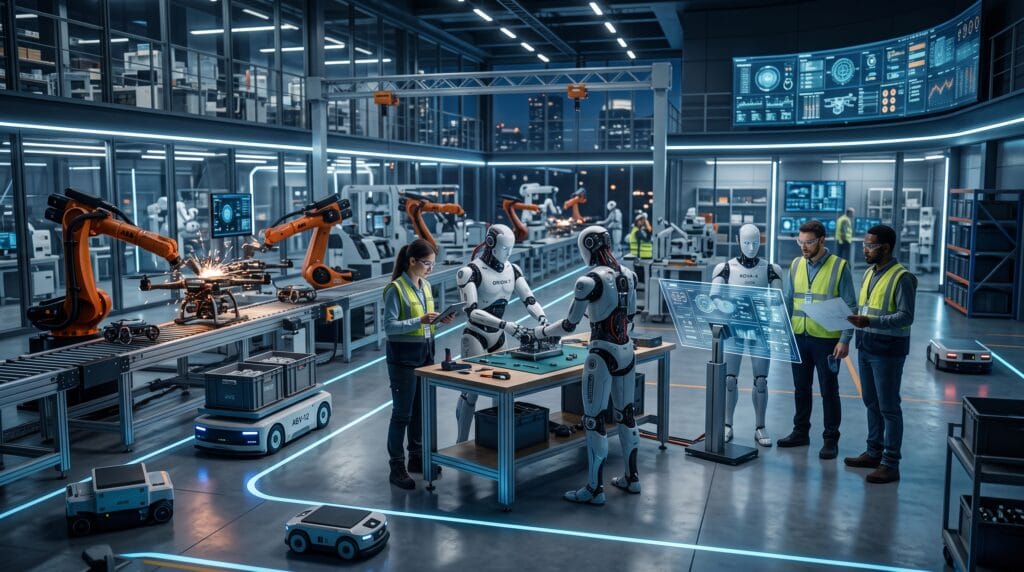
The rapid advancement of robotics technology is transforming the way industries operate, products are manufactured, and services are delivered. From factory assembly lines and autonomous warehouses to surgical robots and agricultural machines, robotics has become a driving force behind automation and innovation. As artificial intelligence, machine learning, and sensor technologies continue to evolve, robots are becoming more capable, adaptable, and efficient than ever before.
Today, robotics is no longer limited to industrial manufacturing. Intelligent machines assist doctors during complex procedures, help farmers monitor crops, support logistics companies in managing warehouses, and even perform household tasks. This comprehensive guide explores robotics technology, its major applications, benefits, challenges, and how it is shaping the future of automation.
What Is Robotics Technology?
Robotics technology is the field of designing, building, programming, and operating robots that can perform tasks automatically or with minimal human intervention.
A robot typically combines:
- Mechanical components
- Sensors
- Actuators
- Control systems
- Software
- Artificial intelligence (in some systems)
These components enable robots to interact with their environment and complete specific tasks accurately and efficiently.
How Robotics Technology Works
Modern robots operate through a combination of hardware and software.
The basic workflow includes:
- Sensors collect information from the environment.
- Software processes the incoming data.
- A controller determines the appropriate action.
- Motors and actuators perform the movement.
- Feedback systems monitor results and adjust performance if needed.
Advanced robots may also use machine learning to improve performance over time.
Why Robotics Technology Is Important
Robotics plays an increasingly important role across industries.
Benefits include:
- Higher productivity
- Improved precision
- Reduced operational costs
- Enhanced workplace safety
- Increased production speed
- Better product quality
- Continuous 24/7 operation
Automation allows organizations to focus human expertise on tasks requiring creativity, judgment, and complex problem-solving.
Types of Robots
Different robots are designed for different purposes.
1. Industrial Robots
Industrial robots are commonly used in manufacturing.
Applications include:
- Welding
- Painting
- Assembly
- Packaging
- Material handling
- Quality inspection
These robots improve efficiency and consistency in production environments.
2. Service Robots
Service robots assist people in commercial and public settings.
Examples include:
- Hotel assistants
- Restaurant delivery robots
- Cleaning robots
- Customer service kiosks
- Hospital support robots
They help automate repetitive service tasks.
3. Medical Robots
Healthcare organizations increasingly use robotics.
Applications include:
- Surgical assistance
- Rehabilitation support
- Laboratory automation
- Pharmacy systems
- Medical logistics
Robotic systems can assist healthcare professionals with precision and repetitive tasks.
4. Agricultural Robots
Agriculture benefits from intelligent automation.
Examples include:
- Crop monitoring
- Precision spraying
- Autonomous tractors
- Harvest assistance
- Soil analysis
These technologies help improve efficiency while supporting more sustainable farming practices.
5. Logistics and Warehouse Robots
Modern warehouses rely heavily on robotics.
Common tasks include:
- Inventory movement
- Package sorting
- Order fulfillment
- Stock management
- Autonomous transportation
Warehouse automation helps improve speed and accuracy.
6. Consumer Robots
Robots are becoming common in homes.
Examples include:
- Robot vacuum cleaners
- Lawn mowing robots
- Educational robots
- Smart home assistants
- Entertainment robots
Consumer robotics continues to expand as technology becomes more affordable.
Robotics Technology Across Industries
Manufacturing
Manufacturers use robots for:
- Assembly
- Welding
- Inspection
- Packaging
- Quality control
Automation increases production efficiency while reducing repetitive manual work.
Healthcare
Healthcare applications include:
- Surgical support
- Medical imaging assistance
- Hospital logistics
- Rehabilitation devices
- Laboratory automation
Robotics supports healthcare professionals in delivering high-quality patient care.
Retail
Retail businesses use robotics for:
- Inventory management
- Shelf monitoring
- Automated checkout support
- Warehouse fulfillment
These solutions improve operational efficiency and inventory accuracy.
Logistics
Logistics companies automate:
- Warehouse operations
- Delivery sorting
- Inventory movement
- Route optimization
Automation helps meet growing customer expectations for faster deliveries.
Agriculture
Robotics assists farmers through:
- Precision farming
- Crop monitoring
- Weed detection
- Harvest support
- Livestock monitoring
Automation can improve productivity while optimizing resource use.
Artificial Intelligence and Robotics
AI significantly expands robot capabilities.
AI enables robots to:
- Recognize objects
- Navigate environments
- Understand voice commands
- Analyze data
- Learn from experience
- Adapt to changing conditions
The combination of AI and robotics is driving the next generation of intelligent automation.
Benefits of Robotics Technology
Organizations adopting robotics often experience:
- Increased efficiency
- Improved workplace safety
- Higher production quality
- Lower operational costs
- Reduced repetitive work
- Better consistency
- Enhanced scalability
Successful implementation combines automation with skilled human oversight.
Challenges of Robotics
Despite its advantages, robotics presents challenges.
Common considerations include:
- High initial investment
- System maintenance
- Workforce training
- Cybersecurity
- Integration with existing systems
- Ethical considerations
- Ongoing software updates
Careful planning helps organizations maximize the benefits of automation.
Future Trends in Robotics
The future of robotics technology is expected to include:
- More collaborative robots (cobots)
- Smarter AI integration
- Autonomous mobile robots
- Human-robot collaboration
- Predictive maintenance
- Edge computing
- Cloud-connected robotics
- Sustainable automation
- Digital twins
- Improved machine vision
These developments will continue expanding robotics into new industries and applications.
Robotics Applications Comparison
| Industry | Robotics Applications |
|---|---|
| Manufacturing | Assembly, welding, quality inspection |
| Healthcare | Surgical assistance, laboratory automation |
| Agriculture | Crop monitoring, harvesting, precision farming |
| Logistics | Warehouse automation, inventory management |
| Retail | Stock monitoring, fulfillment, inventory control |
| Construction | Site inspection, surveying, automation |
| Education | STEM learning, robotics training |
| Hospitality | Cleaning, delivery, guest assistance |
Each industry benefits from robotics in different ways depending on its operational needs.
Recommended Robotics Tools and Technologies
| Tool | Purpose |
|---|---|
| ROS (Robot Operating System) | Robot software development |
| Gazebo | Robotics simulation |
| MATLAB | Robotics algorithms and analysis |
| SolidWorks | Mechanical design |
| Fusion 360 | Product and robot design |
| Arduino | Robotics prototyping |
| Raspberry Pi | Embedded robotics projects |
| Python | Robotics programming |
| TensorFlow | AI and machine learning integration |
| OpenCV | Computer vision applications |
These technologies support robotics research, development, and deployment.
Common Robotics Misconceptions
Avoid these common myths:
- Robots can completely replace every human job.
- Every robot uses advanced artificial intelligence.
- Robotics only benefits large manufacturers.
- Robots never require maintenance.
- Automation eliminates the need for skilled workers.
- Robotics is only relevant to technology companies.
In practice, robotics is most effective when it complements human expertise rather than replacing it entirely.
Frequently Asked Questions of Robotics Technology
1. What is robotics technology?
Robotics technology is the field of designing, building, programming, and operating robots that perform tasks automatically or with limited human intervention.
2. How is robotics used today?
Robotics is used in manufacturing, healthcare, logistics, agriculture, retail, education, construction, and consumer products to improve efficiency, accuracy, and safety.
3. What is the difference between robotics and artificial intelligence?
Robotics focuses on creating physical machines that interact with the world, while artificial intelligence enables systems to perform tasks such as learning, recognizing patterns, and making decisions. Many modern robots use AI, but not all robots require it.
4. Will robots replace human workers?
Robots are likely to automate certain repetitive or hazardous tasks, while many roles will continue to require human creativity, critical thinking, communication, and complex decision-making. In many industries, robotics is used to augment human work rather than replace it.
Robotics Technology Checklist
- Understand different robot types
- Identify automation opportunities
- Evaluate return on investment
- Train employees on new systems
- Prioritize safety and cybersecurity
- Integrate AI where appropriate
- Monitor system performance
- Maintain robots regularly
- Stay informed about industry trends
- Continuously optimize automated processes
Best Practices for Adopting Robotics
To successfully implement robotics technology:
- Begin with repetitive, high-value tasks that benefit from automation.
- Define measurable goals before investing in robotics.
- Ensure robots integrate smoothly with existing workflows.
- Train employees to work alongside automated systems.
- Maintain strong cybersecurity and regular software updates.
- Measure performance using productivity, quality, and safety metrics.
- Continuously refine automation strategies as technology evolves.
Organizations that combine robotics with skilled employees and thoughtful planning are better positioned to improve efficiency and remain competitive.
Conclusion on Robotics Technology
Robotics technology is reshaping industries by improving productivity, enhancing precision, and enabling new forms of automation that were once unimaginable. From manufacturing and healthcare to agriculture, logistics, and everyday consumer products, robots are helping organizations solve complex challenges while supporting safer and more efficient operations. As artificial intelligence, sensors, and computing power continue to advance, robotics will become even more capable and accessible. Businesses and individuals that understand these technologies, invest in workforce development, and adopt automation strategically will be well positioned to thrive in the future of intelligent automation.
Also Read: “Technology Trends: The Complete Guide to Future Innovations“