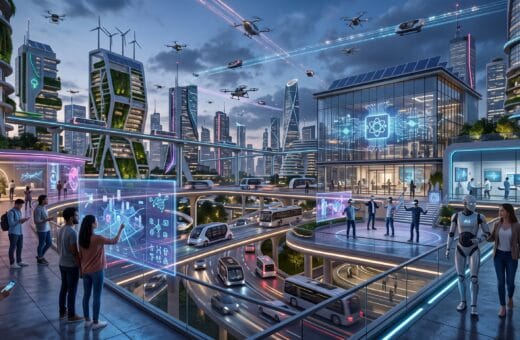
The internet has transformed how people communicate, learn, shop, work, and entertain themselves. From the early static websites of the 1990s to today’s cloud-powered applications, artificial intelligence, and mobile-first experiences, each generation of internet technology has fundamentally changed society. As computing power, networking, and digital infrastructure continue to evolve, future internet technology is expected to deliver faster, more intelligent, and increasingly immersive online experiences.
Rather than being defined by a single invention, the next generation of the internet will likely emerge from several technologies working together. Artificial intelligence, 6G wireless networks, edge computing, decentralized applications, quantum networking research, extended reality (XR), and the Internet of Things (IoT) are all expected to shape how people interact with digital services in the coming years. This guide explores the most important future internet technology trends, their potential benefits, challenges, and real-world applications.
What Is Future Internet Technology?
Future internet technology refers to the next generation of digital networking, computing, and communication systems designed to improve speed, intelligence, security, scalability, and user experiences beyond today’s internet infrastructure.
These technologies aim to provide:
- Faster global connectivity
- Lower latency
- Smarter digital services
- More secure communications
- Decentralized digital ecosystems
- Immersive online experiences
- Greater interoperability between devices
Instead of replacing the internet overnight, these innovations are expected to build on today’s infrastructure over many years.
Why the Internet Must Continue Evolving
The internet faces increasing demands from billions of connected users and devices.
Future technologies aim to address:
- Growing data consumption
- AI-powered applications
- Smart city infrastructure
- Autonomous vehicles
- Remote healthcare
- Industrial automation
- Cybersecurity threats
- Global connectivity gaps
Meeting these demands requires advances in both hardware and software.
12 Future Internet Technology
1. Artificial Intelligence-Native Internet
Artificial intelligence is becoming deeply integrated into internet services.
Future AI-powered capabilities may include:
- Personalized digital experiences
- Intelligent search
- Automated customer support
- Real-time language translation
- Predictive recommendations
- Smarter cybersecurity
Rather than replacing human decision-making, AI is expected to enhance productivity and improve online experiences.
2. 6G Wireless Networks
While many regions are still expanding 5G, researchers are already exploring 6G technologies.
Potential improvements include:
- Higher network speeds
- Lower latency
- More connected devices
- Better support for immersive applications
- Enhanced reliability
Commercial deployment timelines remain uncertain and will vary by region.
3. Edge Computing
Instead of sending every request to distant cloud servers, edge computing processes data closer to users.
Benefits include:
- Faster response times
- Reduced bandwidth usage
- Improved privacy
- Better reliability
- Support for real-time applications
Edge computing is particularly valuable for autonomous systems and industrial automation.
4. Quantum Networking Research
Quantum networking remains an emerging research field.
Potential long-term applications include:
- Highly secure communication
- Quantum key distribution
- Distributed quantum computing
- Advanced scientific research
Large-scale practical deployment is still under development, but ongoing research continues to make progress.
5. Decentralized Web Technologies
Decentralized internet technologies aim to reduce dependence on centralized infrastructure.
Possible advantages include:
- Greater user control
- Improved transparency
- Enhanced digital ownership
- Increased resilience
The pace and scale of adoption will depend on technical, regulatory, and user experience factors.
6. Extended Reality (XR)
XR combines:
- Virtual Reality (VR)
- Augmented Reality (AR)
- Mixed Reality (MR)
Potential internet applications include:
- Virtual workplaces
- Remote education
- Product demonstrations
- Interactive entertainment
- Digital collaboration
As hardware improves, immersive experiences may become more accessible.
7. Internet of Things (IoT)
Billions of connected devices continue to expand the digital ecosystem.
Examples include:
- Smart homes
- Wearable devices
- Connected factories
- Smart agriculture
- Healthcare monitoring
- Intelligent transportation
Reliable connectivity and strong cybersecurity remain essential for IoT growth.
8. Smarter Cybersecurity
Future internet infrastructure will require stronger security.
Emerging approaches include:
- AI-assisted threat detection
- Zero Trust security models
- Behavioral authentication
- Hardware-based security
- Privacy-enhancing technologies
Security must evolve alongside increasingly sophisticated cyber threats.
9. Cloud and Edge Integration
Future computing environments will combine cloud platforms with edge infrastructure.
Benefits include:
- Better scalability
- Lower latency
- Improved resilience
- Efficient workload distribution
This hybrid approach supports applications that require both centralized processing and real-time responsiveness.
10. Satellite Internet Expansion
Low Earth orbit satellite networks are improving internet access in remote areas.
Potential advantages include:
- Broader global coverage
- Rural connectivity
- Disaster recovery support
- Backup communications
Satellite services complement, rather than replace, terrestrial broadband networks.
11. Sustainable Internet Infrastructure
Future networking technologies are expected to emphasize energy efficiency.
Examples include:
- Green data centers
- Efficient networking hardware
- Renewable-powered infrastructure
- Intelligent energy management
Sustainability is becoming an increasingly important consideration in digital infrastructure.
12. Human-Centered Digital Experiences
The next generation of the web is expected to prioritize user experience through:
- Personalized interfaces
- Natural language interaction
- Voice computing
- Accessibility improvements
- Cross-device continuity
Designing technology around human needs improves usability and inclusivity.
Future Internet Technologies Comparison
| Technology | Potential Impact |
|---|---|
| AI-Native Internet | Intelligent digital experiences |
| 6G Networks | Faster wireless connectivity |
| Edge Computing | Lower latency |
| Quantum Networking | Advanced secure communications |
| Decentralized Web | Greater user control |
| Extended Reality (XR) | Immersive experiences |
| Internet of Things | Connected devices |
| Smart Cybersecurity | Stronger digital protection |
| Cloud + Edge Computing | Flexible infrastructure |
| Satellite Internet | Expanded global connectivity |
| Sustainable Infrastructure | Reduced environmental impact |
| Human-Centered Design | Improved user experience |
These technologies are expected to complement one another rather than compete directly.
Industries Likely to Benefit
Future internet technologies may significantly influence:
- Healthcare
- Education
- Manufacturing
- Retail
- Transportation
- Financial services
- Entertainment
- Agriculture
- Government
- Scientific research
Many organizations are already investing in next-generation digital infrastructure.
Helpful Tools for Internet Innovation
| Tool | Purpose |
|---|---|
| ChatGPT | Research and content generation |
| GitHub | Software development collaboration |
| Visual Studio Code | Programming |
| Docker | Application deployment |
| Kubernetes | Container orchestration |
| Wireshark | Network analysis |
| Google Cloud | Cloud infrastructure |
| Microsoft Azure | Enterprise cloud services |
| AWS | Scalable cloud computing |
| Figma | Interface and experience design |
These tools support developers, researchers, and businesses building the next generation of internet applications.
Challenges Facing the Future Internet Technology
Several challenges must be addressed as internet technologies evolve:
- Cybersecurity risks
- Privacy protection
- Infrastructure investment
- Digital inclusion
- Regulatory compliance
- Energy consumption
- Technical interoperability
- Workforce skills development
Addressing these issues will require collaboration among governments, businesses, researchers, and technology providers.
Frequently Asked Questions of Future Internet Technology
1. What is future internet technology?
Future internet technology refers to emerging networking, computing, and communication innovations designed to improve the speed, intelligence, security, and capabilities of tomorrow’s internet.
2. Will AI replace the internet?
No. AI is expected to enhance internet services by improving search, personalization, automation, and decision support. It is likely to become an important layer within the internet rather than replacing it.
3. Will 6G replace 5G?
Eventually, 6G may succeed 5G in many regions, but deployment will likely occur gradually over many years. The timing will depend on research progress, infrastructure investment, standards development, and commercial adoption.
4. Is the decentralized web the future of the internet?
Decentralized technologies may play an important role in certain applications, particularly where transparency, digital ownership, or resilience are priorities. However, the future internet will likely combine centralized, cloud-based, and decentralized approaches depending on the use case.
Future Internet Technology Readiness Checklist
- Strengthen cybersecurity practices
- Invest in cloud-ready infrastructure
- Explore AI-powered business tools
- Optimize for mobile and edge computing
- Monitor developments in 6G and networking
- Improve digital accessibility
- Adopt sustainable technology practices
- Build digital skills within your organization
- Stay informed about emerging standards
- Continuously evaluate new technologies
Best Practices for Preparing for the Next Generation of the Internet
To benefit from future internet technology:
- Focus on technologies that solve real business or customer problems rather than adopting trends without a clear purpose.
- Build flexible digital infrastructure that can adapt to future networking and computing advances.
- Prioritize cybersecurity and privacy as connected systems become more complex.
- Invest in AI, cloud computing, and automation while maintaining appropriate human oversight.
- Design digital experiences that are accessible, responsive, and user-centered.
- Monitor emerging technologies such as quantum networking, extended reality, and advanced wireless communications without assuming immediate widespread adoption.
- Encourage continuous learning so teams can adapt to rapidly evolving digital environments.
Organizations that combine innovation with responsible planning will be better positioned for the next era of internet development.
Conclusion on Future Internet Technology
The future of the internet will likely be shaped by a combination of future internet technology innovations rather than a single breakthrough. Artificial intelligence, edge computing, 6G, quantum networking research, decentralized systems, immersive digital experiences, and sustainable infrastructure all have the potential to redefine how people connect, collaborate, and access information. While many of these technologies are still evolving, businesses and individuals that remain informed, invest strategically, and adapt thoughtfully will be well positioned to thrive in the next generation of the digital world.
Also Read: “AI Technology for Business Growth and Innovation“