
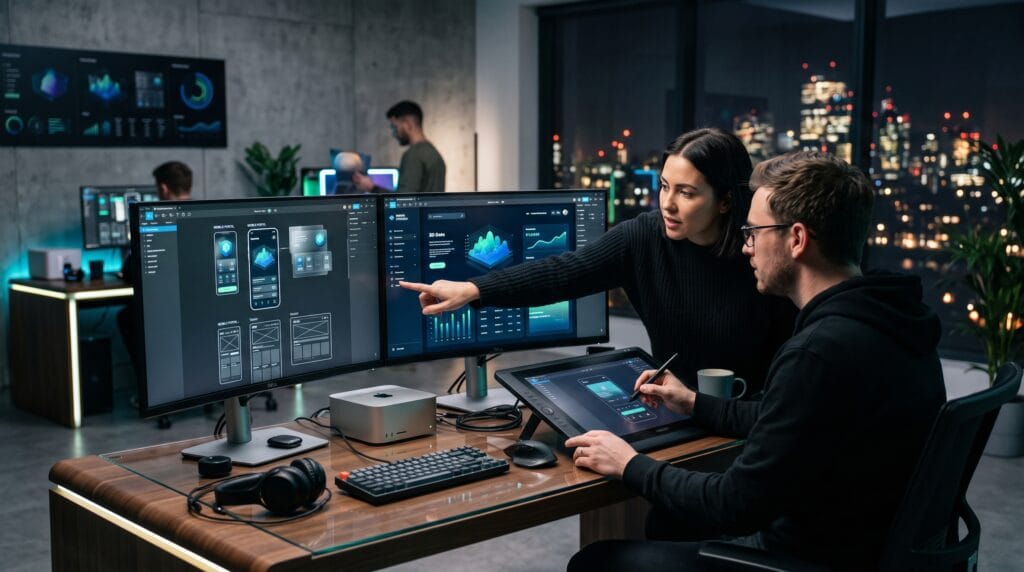
The digital landscape continues to evolve rapidly, and websites are expected to deliver more than attractive visuals. Modern users demand fast performance, intuitive navigation, personalized experiences, accessibility, and seamless functionality across every device. The leading web design trends 2026 reflect these expectations by combining innovative technology with user-centered design principles.
Whether you’re designing a business website, e-commerce store, portfolio, SaaS platform, or personal blog, staying updated with current design trends can improve user engagement, strengthen your brand, and increase conversions. This guide explores the most influential web design trends 2026 that every designer, developer, and business owner should know.
Why Web Design Trends Matter
A modern website is often the first interaction customers have with a business.
Keeping your website current helps:
- Improve user experience
- Increase customer trust
- Boost search engine performance
- Improve accessibility
- Increase conversion rates
- Reduce bounce rates
- Strengthen brand identity
Modern design is about solving user problems, not simply following visual trends.
1. AI-Powered Personalization
Artificial intelligence is making websites more personalized than ever.
AI can dynamically adjust:
- Product recommendations
- Homepage content
- Search results
- Customer support
- Marketing messages
- User journeys
Personalized experiences improve engagement and customer satisfaction.
2. Minimalist Design with Purpose
Minimalism continues evolving beyond aesthetics.
Characteristics include:
- Clean layouts
- Ample white space
- Clear typography
- Focused messaging
- Simple navigation
- Reduced visual clutter
Every design element should serve a clear purpose.
3. Glassmorphism
Glassmorphism remains popular for modern interfaces.
Features include:
- Frosted glass effects
- Soft transparency
- Layered depth
- Blurred backgrounds
- Subtle shadows
When used thoughtfully, it creates elegant and contemporary user interfaces.
4. Bold Typography
Typography is becoming a primary visual element.
Best practices:
- Large headlines
- High contrast
- Variable fonts
- Clear hierarchy
- Improved readability
Strong typography captures attention while improving usability.
5. AI-Generated Design Assistance
Designers increasingly use AI to accelerate creative workflows.
AI supports:
- Wireframe generation
- Layout suggestions
- Color palette creation
- Content recommendations
- Accessibility improvements
Human creativity remains essential, while AI speeds up repetitive tasks.
6. Micro-Interactions
Small animations create more engaging user experiences.
Examples include:
- Button hover effects
- Loading animations
- Form validation
- Navigation transitions
- Notification feedback
Subtle interactions improve usability without becoming distracting.
7. Dark Mode
Dark interfaces continue gaining popularity.
Benefits include:
- Reduced eye strain
- Modern appearance
- Improved battery efficiency on OLED devices
- Enhanced visual contrast
Offering both light and dark themes improves user flexibility.
8. 3D Visual Elements
Three-dimensional graphics create depth and realism.
Applications include:
- Product showcases
- Hero sections
- Interactive illustrations
- Animated icons
- Website backgrounds
Modern browsers now support smoother 3D rendering.
9. Motion Design
Purposeful animation guides users through websites.
Examples include:
- Scroll animations
- Page transitions
- Interactive storytelling
- Animated illustrations
- Progress indicators
Motion should enhance usability rather than distract visitors.
10. Mobile-First Design
Mobile traffic continues to dominate internet usage.
Priorities include:
- Responsive layouts
- Fast loading
- Touch-friendly navigation
- Simplified menus
- Optimized images
Designing for mobile first often results in better experiences across all devices.
11. Accessibility by Default
Inclusive design is becoming a standard requirement.
Accessibility improvements include:
- Keyboard navigation
- High color contrast
- Alternative text for images
- Readable typography
- Screen reader compatibility
- Clear focus indicators
Accessible websites serve a broader audience and often perform better overall.
12. Sustainable Web Design
Sustainability extends to digital experiences.
Practices include:
- Optimized images
- Efficient code
- Reduced server requests
- Lightweight animations
- Green hosting providers
Efficient websites reduce energy consumption while improving performance.
13. Voice User Interfaces
Voice search and voice interactions continue expanding.
Optimize for:
- Conversational content
- Natural language queries
- Voice-friendly navigation
- Local search
Voice experiences complement traditional navigation.
14. Advanced Scrolling Experiences
Scrolling is becoming more interactive.
Examples include:
- Horizontal scrolling sections
- Parallax effects
- Storytelling layouts
- Sticky content
- Scroll-triggered animations
These techniques should always prioritize usability.
15. Data Visualization
Businesses increasingly use interactive dashboards.
Effective visualization includes:
- Animated charts
- Interactive graphs
- Infographics
- Live statistics
- Business dashboards
Well-designed data builds credibility and improves understanding.
Essential Web Design Best Practices
Regardless of current trends, successful websites should always:
- Load quickly
- Be responsive
- Follow accessibility standards
- Use clear navigation
- Maintain consistent branding
- Optimize for SEO
- Include clear calls to action
Good fundamentals remain more valuable than trendy visual effects.
Recommended Web Design Tools
| Tool | Purpose |
|---|---|
| Figma | UI/UX design |
| Adobe XD | Interface prototyping |
| Webflow | Visual website development |
| Framer | Interactive web design |
| WordPress | Content management |
| Canva | Web graphics |
| Hotjar | User behavior analysis |
| Google Analytics | Website performance |
| PageSpeed Insights | Speed optimization |
| Lighthouse | Performance and accessibility audits |
Web Design Trends Comparison
| Trend | Primary Benefit |
|---|---|
| AI Personalization | Customized user experiences |
| Glassmorphism | Modern interface design |
| Bold Typography | Strong visual hierarchy |
| Micro-Interactions | Better usability |
| Dark Mode | Improved user comfort |
| Motion Design | Increased engagement |
| Mobile-First Design | Better responsiveness |
| Accessibility | Inclusive experiences |
| Sustainable Design | Faster, more efficient websites |
| Data Visualization | Clear communication |
Common Web Design Trends Mistakes
Avoid these common issues:
- Slow page loading
- Poor mobile responsiveness
- Cluttered layouts
- Weak typography
- Excessive animations
- Inconsistent branding
- Difficult navigation
- Ignoring accessibility
- Low-quality images
- Missing calls to action
Simple, user-focused design generally delivers the best results.
Frequently Asked Questions of Web Design Trends
1. What is the biggest web design trend in 2026?
AI-powered personalization is expected to have one of the greatest impacts by delivering customized content, recommendations, and user experiences based on visitor behavior.
2. Is minimalism still popular?
Yes. Minimalism continues to evolve with cleaner layouts, stronger typography, improved accessibility, and purposeful use of white space.
3. How important is responsive design in 2026?
Responsive, mobile-first design remains essential because the majority of users access websites from smartphones and tablets.
4. Should every website follow design trends?
Not necessarily. Trends should support your business goals and user needs rather than being adopted solely because they are popular.
Web Design Trends Checklist for 2026
- Build mobile-first layouts
- Optimize website speed
- Prioritize accessibility
- Use consistent branding
- Implement AI where appropriate
- Improve user navigation
- Use high-quality visuals
- Optimize for SEO
- Test across multiple devices
- Continuously monitor user behavior
Best Practices for Future-Ready Websites
To create websites that remain effective beyond 2026:
- Design around user needs rather than trends.
- Keep interfaces simple and intuitive.
- Optimize performance before adding visual effects.
- Invest in accessibility from the beginning.
- Use AI responsibly to enhance personalization.
- Continuously test and improve user experiences.
- Stay informed about evolving web standards and technologies.
Combining timeless usability principles with emerging innovations creates websites that are both modern and sustainable.
Conclusion on Web Design Trends
The leading web design trends 2026 demonstrate that successful websites are no longer defined by appearance alone. Speed, accessibility, personalization, sustainability, and exceptional user experiences have become equally important. By embracing innovations such as AI-powered personalization, mobile-first design, micro-interactions, and modern visual styles while maintaining strong usability fundamentals, businesses and designers can create websites that engage visitors, strengthen brand credibility, and drive long-term growth. The future of web design belongs to experiences that are not only visually impressive but also meaningful, inclusive, and performance-driven.
Also Read: “20 Graphic Design Portfolio Tips That Get You Hired“


