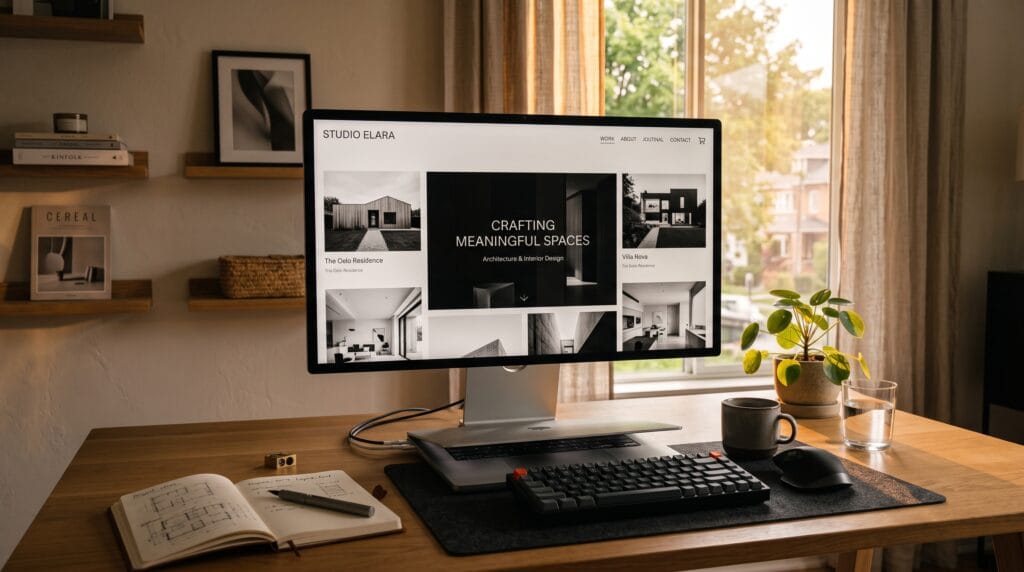
Minimalism has become one of the most influential trends in modern web design. As users increasingly expect faster websites, intuitive navigation, and distraction-free experiences, designers are embracing simplicity to communicate ideas more effectively. The best minimalist web design examples prove that reducing visual clutter doesn’t mean sacrificing creativity, it often enhances it by allowing content, imagery, and user interactions to shine.
A minimalist website focuses on clarity, usability, and purposeful design. Every color, font, image, and layout element serves a specific function, resulting in elegant interfaces that feel modern, professional, and memorable. Whether you’re designing a portfolio, ecommerce store, SaaS platform, agency website, or corporate homepage, these minimalist web design examples and best practices can inspire your next creative project.
What Is Minimalist Web Design?
Minimalist web design is an approach that removes unnecessary visual elements while emphasizing usability, readability, and purposeful communication.
Core characteristics include:
- Clean layouts
- Generous white space
- Limited color palettes
- Simple navigation
- Strong typography
- High-quality imagery
- Fast loading performance
- Consistent branding
Every design choice should improve the user experience rather than distract from it.
Why Minimalist Design Works
Minimalist websites offer several advantages.
Benefits include:
- Faster page loading
- Better readability
- Stronger brand recognition
- Improved mobile usability
- Higher conversion potential
- Easier navigation
- Timeless visual appeal
Simple interfaces often help users complete tasks more efficiently.
Essential Principles of Minimalist Web Design
Successful minimalist websites follow several design principles:
- Simplicity
- Functionality
- Consistency
- Visual hierarchy
- Balance
- Accessibility
- Purposeful spacing
Minimalism is about designing with intention rather than removing elements arbitrarily.
Minimalist Web Design Examples
1. Full-Screen Hero Sections
Many minimalist websites begin with a striking hero section.
Include:
- Clear headline
- Supporting text
- Strong call-to-action
- High-quality imagery
- Generous spacing
A compelling hero immediately communicates the website’s purpose.
2. Typography-First Design
Typography often becomes the primary design feature.
Best practices:
- Large headings
- Clear font hierarchy
- Limited font families
- Comfortable line spacing
- Readable body text
Well-crafted typography improves both aesthetics and usability.
3. Monochrome Color Palettes
Simple color schemes create elegant experiences.
Popular combinations include:
- Black + White
- Charcoal + Ivory
- Gray + White
- Navy + Cream
Accent colors can be introduced sparingly to highlight calls-to-action.
4. Generous White Space
White space is one of the defining elements of minimalist design.
Benefits include:
- Improved focus
- Better readability
- Balanced layouts
- Premium appearance
White space helps organize information naturally.
5. Grid-Based Layouts
Grid systems provide structure and consistency.
Advantages include:
- Better alignment
- Predictable layouts
- Improved responsiveness
- Easier content organization
Grids simplify responsive web design across devices.
6. High-Quality Photography
Minimalist websites often feature fewer images, but each image has greater impact.
Choose photography that is:
- High resolution
- Authentic
- Brand consistent
- Emotionally engaging
Professional imagery enhances credibility.
7. Subtle Micro-Interactions
Interactive elements improve user engagement without overwhelming visitors.
Examples include:
- Button hover effects
- Smooth scrolling
- Image fade-ins
- Navigation transitions
- Animated icons
Animations should enhance usability rather than distract users.
8. Minimal Navigation
Simple navigation helps users find information quickly.
Best practices:
- Limit primary menu items
- Use descriptive labels
- Keep navigation consistent
- Include clear calls-to-action
Simple navigation reduces decision fatigue.
9. Card-Based Content Layouts
Cards organize content into digestible sections.
Ideal for:
- Blog posts
- Products
- Services
- Portfolios
- Testimonials
Cards improve readability while maintaining visual consistency.
10. Minimalist Ecommerce Websites
Online stores benefit from uncluttered layouts.
Prioritize:
- Large product photos
- Clear pricing
- Simple checkout
- Limited distractions
- Easy filtering
Minimalism keeps the focus on the products.
11. Portfolio Websites
Creative professionals often use minimalist portfolios to highlight their work.
Include:
- Featured projects
- Case studies
- Personal bio
- Contact information
- Testimonials
The design should support, not overshadow the portfolio.
12. Editorial-Inspired Layouts
Magazine-style designs combine simplicity with storytelling.
Features include:
- Large headlines
- Multi-column grids
- Spacious layouts
- Strong visual hierarchy
- High-quality photography
Editorial layouts work particularly well for blogs and luxury brands.
13. Minimal Landing Pages
Landing pages should focus on one objective.
Essential elements include:
- Clear value proposition
- Benefits
- Social proof
- Call-to-action
- Contact form
Removing unnecessary content often improves conversion rates.
14. Mobile-First Minimalism
Design for mobile users by prioritizing:
- Responsive layouts
- Touch-friendly buttons
- Optimized images
- Readable typography
- Fast loading
A mobile-first approach improves accessibility across devices.
15. Dark Mode Minimalism
Dark interfaces continue to gain popularity.
Advantages include:
- Premium appearance
- Reduced eye strain in low-light conditions
- Strong contrast
- Modern aesthetics
Ensure sufficient contrast for readability and accessibility.
Minimalist Website Design Ideas
Creative website concepts include:
- Personal portfolios
- Creative agencies
- SaaS landing pages
- Architecture studios
- Luxury brands
- Photography portfolios
- Interior design firms
- Ecommerce boutiques
- Digital product websites
- Consulting businesses
Minimalist principles can be adapted to almost any industry.
Color Palette Ideas
| Color Palette | Brand Personality |
|---|---|
| Black + White | Timeless elegance |
| Charcoal + Ivory | Premium sophistication |
| Navy + Cream | Trust and professionalism |
| Beige + Brown | Warm and natural |
| Olive Green + White | Sustainable and modern |
| Soft Gray + White | Clean and balanced |
| Sand + Charcoal | Contemporary luxury |
| Forest Green + Cream | Organic and refined |
A restrained palette strengthens consistency and visual harmony.
Recommended Web Design Tools
| Tool | Purpose |
|---|---|
| Figma | UI/UX design |
| Adobe XD | Interface prototyping |
| Webflow | No-code web development |
| Framer | Interactive websites |
| WordPress | Content management |
| Adobe Photoshop | Image editing |
| Adobe Illustrator | Icons and graphics |
| ChatGPT | UX writing and content ideas |
| Google Fonts | Web typography |
| GSAP | Web animations |
These tools support the design and development of modern minimalist websites.
Common Minimalist Design Mistakes
Avoid these common pitfalls:
- Removing important navigation
- Low text contrast
- Excessive white space without purpose
- Poor typography hierarchy
- Slow-loading large images
- Weak calls-to-action
- Generic layouts
- Ignoring accessibility standards
Minimalism should improve clarity, not create confusion.
Frequently Asked Questions
1. What makes a website minimalist?
A minimalist website uses simple layouts, limited colors, purposeful white space, clear typography, and intuitive navigation to improve usability while eliminating unnecessary visual clutter.
2. Are minimalist websites good for SEO?
Yes. When paired with quality content, fast loading speeds, mobile responsiveness, and proper technical optimization, minimalist websites can support strong SEO performance.
3. Can ecommerce websites use minimalist design?
Absolutely. Minimalist ecommerce websites often improve product visibility, simplify navigation, and create streamlined shopping experiences that can support higher conversion rates.
4. Is minimalist design suitable for every business?
Minimalist design works well for many industries, including technology, fashion, architecture, consulting, creative agencies, and luxury brands. The approach should always be adapted to your audience and business goals.
Minimalist Web Design Checklist
- Define your website goals
- Use a limited color palette
- Prioritize typography and readability
- Add purposeful white space
- Optimize for mobile devices
- Compress images for performance
- Simplify navigation
- Include clear calls-to-action
- Test accessibility
- Review and refine user experience regularly
Best Practices for Minimalist Web Design
To get the most from your minimalist web design examples:
- Begin every project with clear user goals and content priorities.
- Remove unnecessary elements while preserving usability and accessibility.
- Build strong visual hierarchy through typography, spacing, and contrast.
- Use high-quality imagery sparingly to maximize visual impact.
- Design responsive layouts that provide consistent experiences across all devices.
- Optimize website performance through efficient code, compressed images, and streamlined assets.
- Test your design with real users and refine it based on feedback to ensure simplicity enhances the overall experience.
Minimalism succeeds when every design element serves a meaningful purpose.
Conclusion on Minimalist Web Design Examples
The best minimalist web design examples demonstrate that simplicity and creativity can work together to create exceptional digital experiences. By combining clean layouts, elegant typography, thoughtful white space, subtle interactions, and intuitive navigation, designers can build websites that are visually appealing, user-friendly, and highly effective. Whether you’re designing a portfolio, ecommerce store, startup website, or luxury brand experience, embracing minimalist principles can help create timeless websites that inspire trust, strengthen brand identity, and deliver outstanding user experiences.
Also Read: “Best Web Design Trends to Follow in 2026“