Cyber threats continue to evolve as businesses become increasingly dependent on cloud computing, remote work, artificial intelligence, and connected digital systems. Organizations of every size now face challenges such as phishing attacks, ransomware, data breaches, insider threats, and increasingly sophisticated cybercriminal tactics. Investing in the right cybersecurity tools is essential for protecting sensitive information, maintaining customer trust, and ensuring business continuity.
Modern cybersecurity is no longer about installing antivirus software alone. Businesses need multiple layers of protection that include endpoint security, identity management, network monitoring, cloud security, backup solutions, and employee awareness. This guide explores the best cybersecurity tools for businesses in 2026, explains their purposes, and provides practical recommendations for building a stronger security strategy.
Why Businesses Need Cybersecurity Tools
A comprehensive cybersecurity strategy helps organizations:
- Protect sensitive business data
- Reduce the risk of cyberattacks
- Improve regulatory compliance
- Minimize operational downtime
- Safeguard customer information
- Detect threats more quickly
- Strengthen business continuity
Cybersecurity is most effective when it combines technology, policies, and employee awareness.
Types of Cybersecurity Tools
Businesses typically use several categories of security software.
These include:
- Endpoint protection
- Firewall solutions
- Identity and access management
- Email security
- Backup and recovery
- Vulnerability management
- Security monitoring
- Cloud security
- Password management
- Security awareness training
Each category addresses different aspects of organizational security.
Best Cybersecurity Tools for Businesses
1. Endpoint Protection Platforms (EPP)
Endpoint protection secures:
- Desktop computers
- Laptops
- Mobile devices
- Servers
Common features include:
- Malware detection
- Behavioral analysis
- Ransomware protection
- Device management
- Threat isolation
Endpoint security forms the first layer of defense for employee devices.
2. Extended Detection and Response (XDR)
XDR platforms combine information from multiple security sources.
Benefits include:
- Centralized monitoring
- Threat correlation
- Faster incident investigation
- Automated response
- Better visibility across systems
Many organizations are adopting XDR to simplify security operations.
3. Next-Generation Firewalls (NGFW)
Modern firewalls offer more than traffic filtering.
Features often include:
- Application awareness
- Intrusion prevention
- Deep packet inspection
- Secure VPN support
- Threat intelligence integration
Firewalls help control and monitor network traffic.
4. Identity and Access Management (IAM)
IAM solutions help ensure that only authorized users can access business systems.
Capabilities include:
- Single sign-on (SSO)
- Multi-factor authentication (MFA)
- Role-based access control
- Identity verification
- User lifecycle management
Strong identity management reduces unauthorized access.
5. Password Managers
Password managers improve account security by:
- Generating strong passwords
- Securely storing credentials
- Sharing passwords safely
- Reducing password reuse
Encouraging employees to use unique passwords is a simple but effective security improvement.
6. Email Security Platforms
Email remains a common target for cyberattacks.
Email security tools help protect against:
- Phishing
- Malware attachments
- Spam
- Business email compromise
- Malicious links
Filtering suspicious messages reduces risk before they reach users.
7. Backup and Disaster Recovery Solutions
Reliable backups support business continuity.
Best practices include:
- Automated backups
- Multiple backup locations
- Encryption
- Recovery testing
- Version history
Regular backups help organizations recover more quickly from hardware failures or ransomware incidents.
8. Security Information and Event Management (SIEM)
SIEM platforms collect and analyze security events across an organization.
Benefits include:
- Centralized logging
- Threat detection
- Compliance reporting
- Incident investigation
- Security analytics
SIEM tools help security teams monitor large environments more effectively.
9. Vulnerability Management Tools
These tools help organizations identify security weaknesses before attackers exploit them.
Typical functions include:
- Asset discovery
- Vulnerability scanning
- Risk prioritization
- Patch management support
- Reporting
Regular assessments strengthen an organization’s overall security posture.
10. Cloud Security Platforms
Businesses increasingly rely on cloud services.
Cloud security tools assist with:
- Configuration monitoring
- Identity management
- Data protection
- Compliance monitoring
- Threat detection
Proper cloud security is essential as organizations adopt hybrid and multi-cloud environments.
11. Data Loss Prevention (DLP)
DLP solutions help prevent sensitive information from leaving the organization unintentionally or without authorization.
They can monitor:
- Cloud storage
- USB devices
- File transfers
- Internal communications
Protecting confidential information reduces legal and financial risks.
12. Security Awareness Training Platforms
Technology alone cannot stop every cyberattack.
Training employees helps them recognize:
- Phishing emails
- Social engineering
- Suspicious websites
- Unsafe downloads
- Password risks
Human awareness remains one of the strongest cybersecurity defenses.
Emerging Cybersecurity Trends in 2026
Businesses are increasingly adopting:
- AI-assisted threat detection
- Zero Trust security models
- Passwordless authentication
- Behavioral analytics
- Cloud-native security
- Automated incident response
- Identity-first security
- Continuous risk monitoring
These technologies improve detection speed and support more proactive security management.
Cybersecurity Tools Comparison
| Tool Category | Primary Purpose |
|---|---|
| Endpoint Protection | Secure employee devices |
| XDR | Unified threat detection and response |
| Firewall | Network traffic protection |
| Identity & Access Management | Secure user authentication |
| Password Manager | Credential protection |
| Email Security | Block phishing and malware |
| Backup & Recovery | Restore business data |
| SIEM | Centralized security monitoring |
| Vulnerability Scanner | Identify security weaknesses |
| Cloud Security | Protect cloud infrastructure |
| Data Loss Prevention | Prevent unauthorized data sharing |
| Security Awareness Training | Educate employees |
Using multiple layers of security provides stronger protection than relying on a single tool.
How to Choose the Right Cybersecurity Tools
Consider the following factors:
- Business size.
- Industry regulations.
- Budget.
- Cloud usage.
- Remote workforce needs.
- Existing IT infrastructure.
- Internal security expertise.
- Scalability.
Choose solutions that work well together rather than selecting isolated products.
Cybersecurity Implementation Checklist
- Protect every endpoint
- Enable multi-factor authentication
- Use a password manager
- Secure business email
- Schedule automatic backups
- Monitor security events
- Scan for vulnerabilities regularly
- Protect cloud environments
- Train employees continuously
- Review security policies annually
Security is most effective when it combines technology with clear processes.
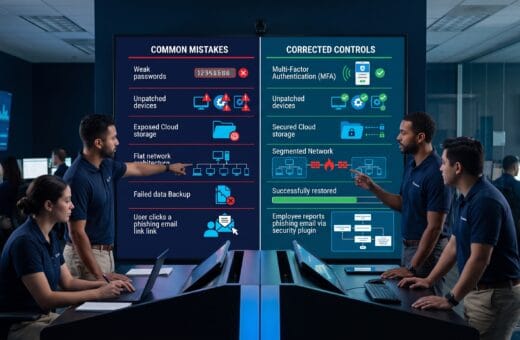
Common Cybersecurity Mistakes
Avoid these common errors:
- Relying on antivirus software alone
- Reusing passwords
- Delaying software updates
- Ignoring employee training
- Skipping regular backups
- Granting excessive user permissions
- Failing to monitor security logs
- Neglecting cloud security settings
A proactive approach reduces the likelihood and impact of cyber incidents.
Frequently Asked Questions
1. What are cybersecurity tools?
Cybersecurity tools are software and platforms that help organizations protect computers, networks, cloud services, applications, and sensitive information from cyber threats and unauthorized access.
2. Does every small business need cybersecurity tools?
Yes. Small businesses are also targeted by cybercriminals. Even basic protections, such as endpoint security, password management, multi-factor authentication, secure backups, and employee awareness training, can significantly reduce risk.
3. What is the most important cybersecurity tool?
There is no single tool that provides complete protection. A layered approach combining endpoint security, identity management, backups, network protection, monitoring, and employee training offers stronger overall security.
4. How often should businesses review their cybersecurity tools?
Businesses should evaluate their cybersecurity strategy at least annually, and more frequently when introducing new technologies, expanding operations, or responding to emerging threats.
Best Practices for Strong Business Security
To maximize the effectiveness of your cybersecurity tools:
- Build a layered security strategy instead of relying on a single solution.
- Enable multi-factor authentication across all business accounts.
- Keep operating systems and applications updated with the latest security patches.
- Train employees regularly to recognize phishing and social engineering attacks.
- Back up critical business data and test recovery procedures.
- Monitor security events continuously and respond quickly to suspicious activity.
- Review security policies regularly as your business grows and new technologies are adopted.
Cybersecurity is an ongoing process that requires continuous improvement rather than a one-time investment.
Conclusion on Cybersecurity Tools
Selecting the right cybersecurity tools is one of the most important investments businesses can make in 2026. As cyber threats become more sophisticated, organizations need multiple layers of protection that include endpoint security, identity management, network defense, cloud security, data backup, continuous monitoring, and employee education. By implementing a comprehensive security strategy, regularly reviewing risks, and staying informed about emerging technologies, businesses can reduce vulnerabilities, protect valuable information, and build greater trust with customers, employees, and partners.
Also Read: “AI Tools Every Small Business Should Use in 2026“