In the luxury market, perception is everything. Before customers experience your products or services, they often judge your brand through your website. A beautifully designed website communicates exclusivity, quality, craftsmanship, and trust qualities that premium customers expect. The best luxury web design ideas combine sophisticated aesthetics with exceptional usability, creating digital experiences that reinforce a brand’s value while encouraging engagement and conversions.
Luxury web design is not about adding more visual effects. Instead, it emphasizes refined typography, elegant layouts, premium photography, intuitive navigation, subtle animations, and seamless user experiences. Whether you’re designing for a luxury fashion label, jewelry brand, hotel, architecture firm, automotive company, or high-end lifestyle business, this guide explores the most effective luxury web design ideas for creating unforgettable digital experiences in 2026.
What Defines Luxury Web Design?
Luxury web design focuses on creating premium digital experiences that reflect exclusivity, elegance, and professionalism.
Key characteristics include:
- Minimalist layouts
- High-end photography
- Sophisticated typography
- Generous white space
- Smooth animations
- Premium color palettes
- Fast performance
- Exceptional user experience
Every design decision should strengthen the perception of quality.
Why Luxury Website Design Ideas Matters
A professionally designed luxury website helps businesses:
- Build customer trust
- Increase perceived value
- Improve brand recognition
- Strengthen credibility
- Encourage customer engagement
- Support premium pricing
- Increase conversions
For premium brands, the website is often the digital equivalent of a flagship store.
Luxury Web Design Ideas for Premium Brands
1. Minimalist Layouts
Luxury brands often embrace simplicity.
Characteristics include:
- Spacious layouts
- Clean compositions
- Limited visual clutter
- Focused messaging
- Elegant balance
Minimalism allows products and storytelling to take center stage.
2. Premium Photography
High-quality imagery is essential.
Best practices:
- Professional photography
- Editorial-style compositions
- Natural lighting
- Consistent visual style
- Large full-width images
Photography communicates craftsmanship more effectively than excessive text.
3. Elegant Typography
Typography strongly influences brand perception.
Serif Fonts
Ideal for:
- Luxury fashion
- Hotels
- Jewelry
- Editorial brands
Modern Sans-Serif Fonts
Perfect for:
- Premium technology
- Architecture
- Interior design
- Contemporary luxury
Limit font choices to maintain a clean and refined appearance.
4. Sophisticated Color Palettes
Luxury websites often use restrained color combinations.
Popular palettes include:
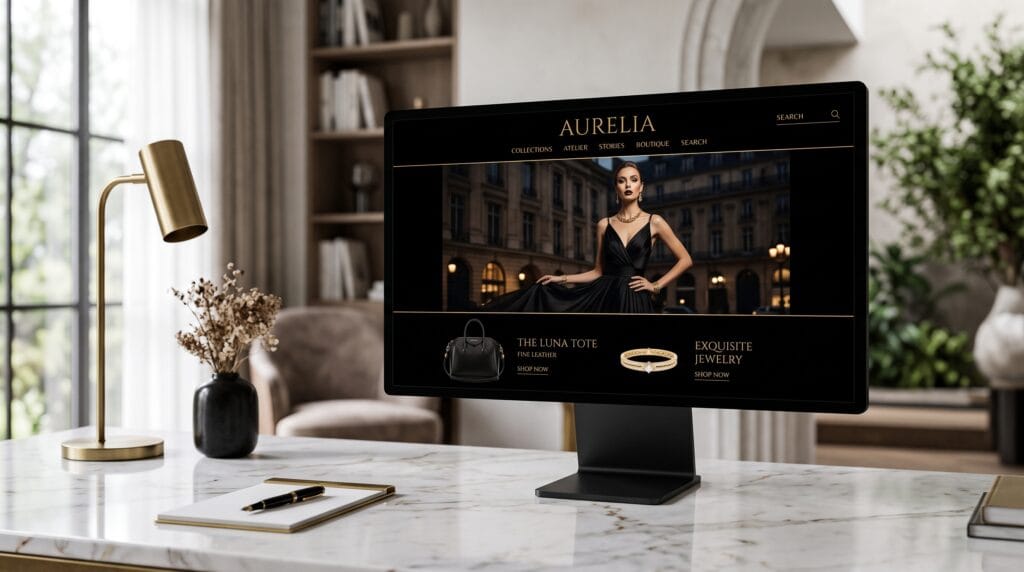
- Black + Gold
- White + Charcoal
- Beige + Brown
- Cream + Dark Gray
- Navy + Gold
- Emerald + Ivory
- Marble White + Black
Subtle accent colors often create a stronger impression than highly saturated palettes.
5. Generous White Space
White space creates elegance and improves readability.
Benefits include:
- Better visual hierarchy
- Improved focus
- Premium appearance
- Reduced cognitive load
Space should be viewed as a design element rather than empty content.
6. Full-Screen Hero Sections
Hero sections create memorable first impressions.
Include:
- Premium photography
- Clear headlines
- Minimal copy
- Strong calls-to-action
- Smooth scrolling cues
An impactful hero section establishes the tone for the entire website.
7. Refined Micro-Animations
Subtle motion enhances the browsing experience.
Examples include:
- Hover effects
- Fade transitions
- Smooth scrolling
- Button interactions
- Image reveals
Animations should support usability rather than distract visitors.
8. Editorial-Inspired Layouts
Magazine-inspired designs reinforce sophistication.
Features include:
- Large headlines
- Asymmetrical grids
- Storytelling sections
- High-quality imagery
- Elegant spacing
Editorial layouts work particularly well for luxury lifestyle brands.
9. Premium Product Presentation
Luxury products deserve premium presentation.
Showcase products using:
- Large images
- Multiple viewing angles
- Lifestyle photography
- Close-up details
- Minimal distractions
Thoughtful presentation reinforces craftsmanship and quality.
10. Seamless Mobile Experience
Luxury customers expect excellent mobile usability.
Optimize:
- Responsive layouts
- Touch-friendly navigation
- Fast loading times
- Mobile typography
- Simplified checkout
A premium experience should be consistent across all devices.
11. Personalized User Experiences
Modern luxury brands increasingly personalize digital experiences.
Examples include:
- Curated product recommendations
- Personalized landing pages
- Exclusive member content
- Appointment booking
- Tailored shopping experiences
Personalization helps strengthen customer relationships.
12. Luxury Storytelling
Successful premium brands tell compelling stories.
Share content about:
- Brand heritage
- Craftsmanship
- Designers
- Sustainability initiatives
- Customer experiences
- Product creation process
Storytelling builds emotional connections beyond product features.
13. High-End Ecommerce Design
Luxury ecommerce websites emphasize quality over quantity.
Best practices include:
- Clean product pages
- Elegant checkout
- Secure payment systems
- Minimal distractions
- Premium packaging previews
The purchasing experience should feel effortless.
14. Exclusive Member Areas
Premium brands often create private digital experiences.
Examples include:
- VIP collections
- Early product access
- Loyalty rewards
- Personalized services
- Exclusive events
Exclusive experiences reinforce brand prestige.
15. Performance and Accessibility
Luxury websites should be visually impressive without sacrificing usability.
Focus on:
- Fast page loading
- Optimized images
- Keyboard navigation
- Accessible color contrast
- Clear semantic structure
- Secure browsing
Excellent performance contributes to a premium user experience.
Luxury Web Design Ideas for Color Palette
| Color Palette | Brand Personality |
|---|---|
| Black + Gold | Prestige and exclusivity |
| White + Charcoal | Modern elegance |
| Beige + Brown | Warm sophistication |
| Emerald + Ivory | Premium craftsmanship |
| Navy + Gold | Timeless luxury |
| Cream + Black | Minimal refinement |
| Marble White + Gray | Contemporary elegance |
| Deep Burgundy + Gold | Heritage and richness |
Choose colors that align with your brand identity and audience expectations.
Essential Pages for Luxury Websites
Every premium website should include:
- Home
- About the Brand
- Products or Services
- Craftsmanship or Process
- Collections
- Journal or Blog
- Testimonials
- Contact
- FAQs
- Privacy Policy
Clear navigation improves both usability and customer confidence.
Recommended Web Design Tools
| Tool | Purpose |
|---|---|
| Figma | UI/UX design |
| Adobe Photoshop | Image editing |
| Adobe Illustrator | Vector graphics |
| Webflow | Luxury website development |
| Framer | Interactive website design |
| WordPress | Content management |
| Adobe Lightroom | Photo enhancement |
| ChatGPT | UX copywriting and content ideas |
| Google Fonts | Premium typography |
| GSAP | High-performance web animations |
These tools help designers create polished, premium digital experiences.
Common Mistakes of Luxury Web Design Ideas
Avoid these common pitfalls:
- Overusing animations
- Cluttered layouts
- Slow page loading
- Low-quality photography
- Too many font styles
- Weak visual hierarchy
- Inconsistent branding
- Ignoring mobile optimization
Luxury design is defined by refinement, not excess.
Frequently Asked Questions
1. What makes a website look luxurious?
Luxury websites typically feature minimalist layouts, premium photography, elegant typography, refined color palettes, generous white space, smooth interactions, and a strong focus on user experience.
2. Which colors work best for luxury web design?
Black, white, charcoal, gold, ivory, navy, emerald, and beige are commonly used because they convey sophistication, exclusivity, and timeless elegance.
3. Is minimalism important for luxury brands?
Yes. Minimalism allows products, storytelling, and craftsmanship to stand out while creating a clean and premium browsing experience.
4. Should luxury websites prioritize performance?
Absolutely. Fast loading times, responsive layouts, accessibility, and seamless navigation are essential components of a premium digital experience.
Luxury Web Design Ideas Checklist
- Define your brand identity
- Use a refined color palette
- Invest in professional photography
- Choose elegant typography
- Create generous white space
- Optimize for mobile devices
- Improve website performance
- Maintain consistent branding
- Test user experience across devices
- Update content and visuals regularly
Best Practices for Luxury Web Design
To get the most from your luxury web design ideas:
- Design every page with clarity, simplicity, and purpose rather than adding unnecessary visual elements.
- Invest in premium photography and carefully crafted copy that reflects your brand’s values.
- Use typography, spacing, and color strategically to create a sophisticated visual hierarchy.
- Prioritize seamless navigation and fast performance across desktop, tablet, and mobile devices.
- Maintain consistent branding across your website, packaging, social media, and marketing materials.
- Build trust through transparent information, secure browsing, and polished customer experiences.
- Review analytics and user feedback regularly to refine the experience while preserving your brand’s premium identity.
Luxury web design succeeds when elegance, usability, and storytelling work together to create lasting impressions.
Conclusion on Luxury Web Design Ideas
The best luxury web design ideas focus on delivering refined digital experiences that reflect quality, exclusivity, and craftsmanship. By combining minimalist layouts, premium photography, elegant typography, thoughtful color palettes, intuitive navigation, and exceptional performance, premium brands can create websites that inspire confidence and strengthen customer relationships. Whether you’re designing for fashion, hospitality, architecture, real estate, jewelry, or luxury ecommerce, a carefully crafted website becomes a powerful extension of your brand, helping attract discerning customers and supporting sustainable long-term growth.
Also Read: “Modern Web Design Ideas That Improve User Experience“